
Solutions

Solutions

One capability — in-situ nanobubble oxidation — applied to seven kinds of water problem.

Axbold applies one capability across every water it treats: gas infused as nanobubbles, in situ, at 220 million per mL. What changes between a grow-out pond, a leach circuit, a lagoon and a coastal outfall is the gas selected and how long it runs. The platform does not change. Ozone shreds contaminants at the functional group level, oxygen raises dissolved oxygen through the full water column, and natural air activates the aerobic biology that keeps water stable afterward.

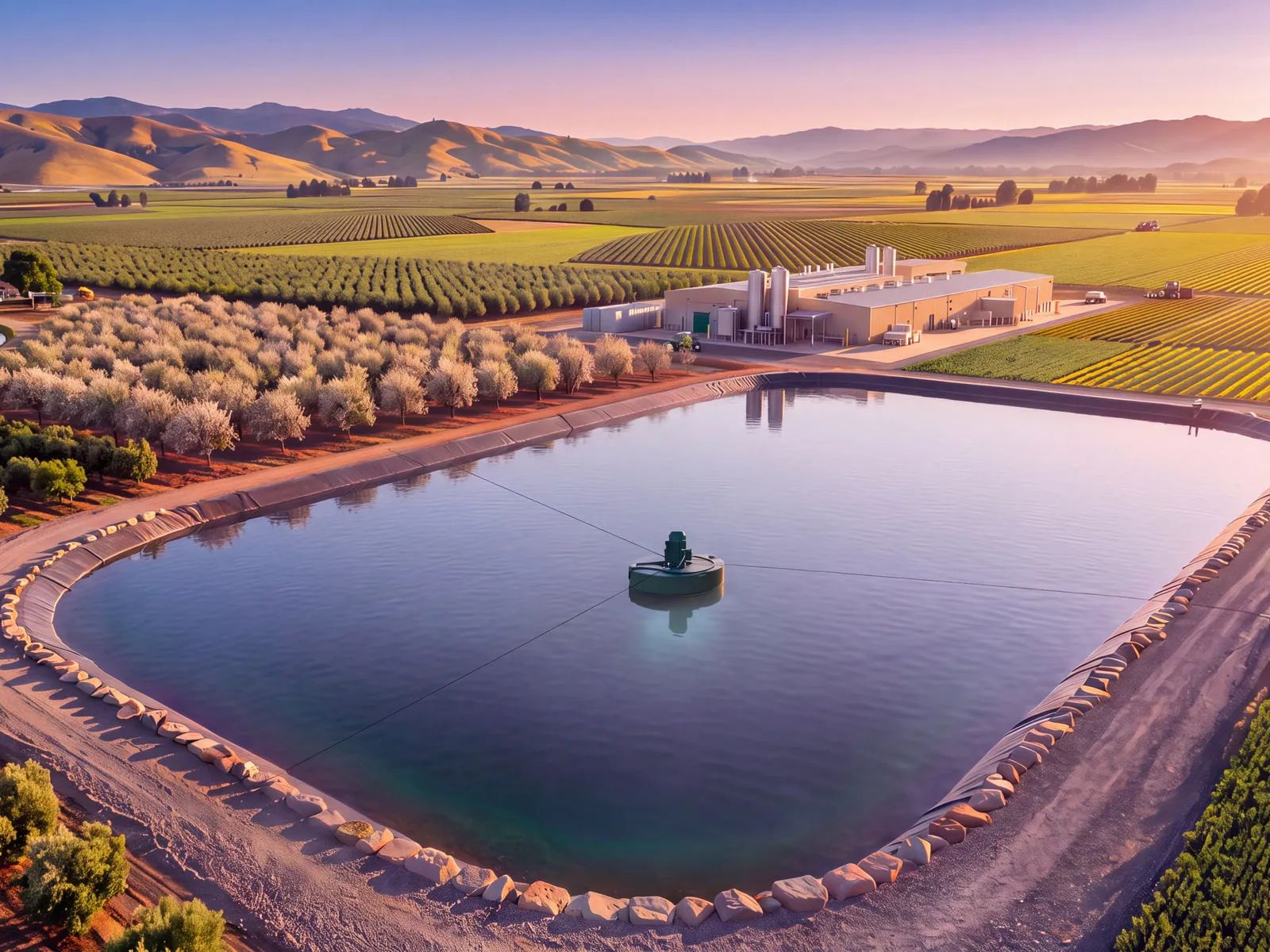
Because the Guardian floats on the water it treats, the work happens where the problem is rather than at a fixed inlet, and the deployment needs less permitting, equipment and space. Each solution area below sets out what the system does in that operating context, and the throughput and maintenance it runs on.

The seven

Where nanobubble oxidation earns its place

The constant

The same numbers underwrite every one of them

220M

Nanobubbles / mL

Roughly one billion per teaspoon

76 nm

Average Bubble Size

Measured by NanoSight tracking analysis

2.7 kWh

Energy Consumption

79% less than conventional nanobubble units

90%

Gas Mass Transfer

Into the fluid, not out to atmosphere

Common questions

What is a nanobubble, and how is it different from a microbubble or a coarse bubble?

A nanobubble is a gas bubble small enough that buoyancy stops governing it, so it stays suspended in the liquid instead of rising. Axbold systems produce 220 million nanobubbles per mL, roughly 1 billion per teaspoon, at an average bubble size of 76 nm, independently measured by NanoSight nanoparticle tracking analysis. Coarse and micro bubbles rise and break at the surface, taking their gas with them; Axbold nanobubbles can stay in solution for months, are electrically charged and are highly pressurized. That combination of persistence, surface area and charge is what produces the contact strength the systems are built around.

Are chemicals required?

No. Axbold remediation and mitigation work swiftly balances seas, outfalls, lakes, ponds, lagoons, rivers and more without chemicals or invasive interventions. The working agent is the gas itself, air, oxygen or ozone, infused into the water as nanobubbles, so there is no reagent to store, meter or account for.

How is Axbold bought?

Axbold is purchased as a water security service program, not as a box on a purchase order. Programs are custom crafted for effective, practical, sustainable outcomes and come in three forms: Proactive, which mitigates risks to water security with efficient aquatic resilience programs; Emergent, which remediates active threats with heavy duty oxidation programs; and Embedded, for cases where the physical assets need to sit on the balance sheet. Every program has built-in solution consulting, testing and data services, and those services can also be procured independently.

Where is the system installed?

On the water itself. Floating platform configurations enable aeration, oxidation and other gas-into-liquid facilities in situ, which addresses risks more directly than treating a slipstream after the fact. Submersible, air-cooled and in-line configurations are also available where a floating deployment is not appropriate.

Connect

Discover more

Tell us about the water body, the contaminant or target, the volume and what you have already tried. That is enough for a useful first answer.